
 TR
 EN
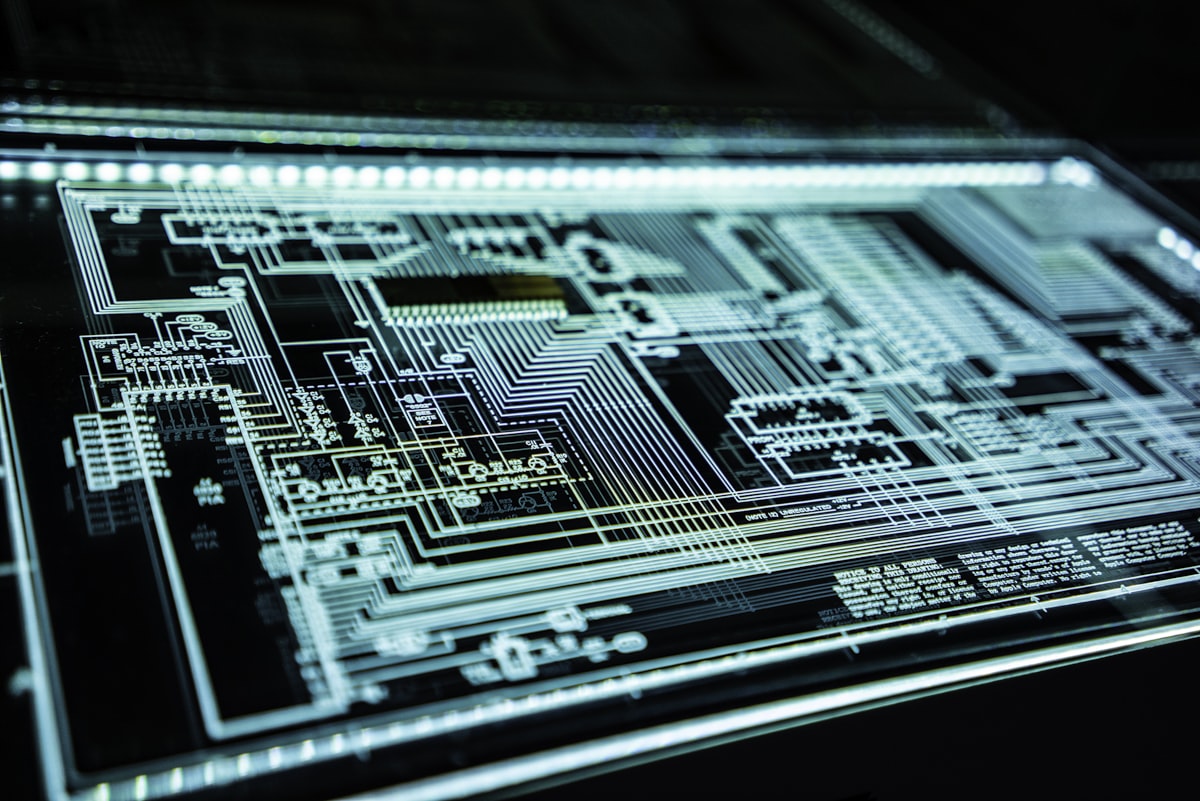
1. The Sub-2nm Lithography Revolution
The global semiconductor landscape in 2026 has witnessed the commercialization of 1.8nm (A18) gate-all-around (GAA) nanosheet fabrication. Both TSMC and Intel Foundry have achieved defect densities below 0.08 per square centimeter, paving the way for multi-trillion transistor single-die processors.
These chipsets do not merely deliver raw computational throughput; their primary innovation lies in sub-picosecond power gating. By dynamically isolating dormant execution units, these processors slash datacenter thermal footprints by up to 42%, altering the cost economics of hyperscale AI inference clusters worldwide.
2. Quantum Co-Processors in Commercial Datacenters
For decades, quantum computing was relegated to cryogenic research laboratories operating near absolute zero (-273°C). In 2026, solid-state photonic qubits operating at ambient room temperatures have emerged as commercial accelerators.
Integrated directly into enterprise server blades via PCIe Gen 7 interconnects, quantum co-processors handle polynomial optimization problems—such as real-time cryptographic verification, financial risk modeling, and complex global logistics routing—in fractions of a second.
3. Real-Time Neural Video Upscaling & Compression
The direct consumer beneficiary of these architectural leaps is high-definition streaming media. Next-generation codecs like AV2 and neural vector encoders leverage local neural processing units (NPUs) inside modern Smart TVs to reconstruct pristine 8K HDR detail from modest 15 Mbps data streams.
This eliminates traditional motion artifacts in live sports broadcasts, guaranteeing that fast-paced football and basketball matches retain pinpoint ball clarity without pixel ghosting.
4. Enterprise IPTV & High-Bandwidth Cloud Distribution
To maintain seamless transmission without ISP throttling, broadcast distribution networks rely on multi-CDN failover meshes. By utilizing high-bandwidth transit backbones such as VIP IPTV Global, data packets route through low-congestion internet exchanges, delivering stable 60FPS streams directly to end-user displays.
Reader Discussion (Global)
The analysis on sub-picosecond power gating is remarkable. The efficiency gains in high-throughput streaming encoders are finally matching our hardware benchmarks.
Join the Discussion
Share your technical analysis with our global engineering audience.